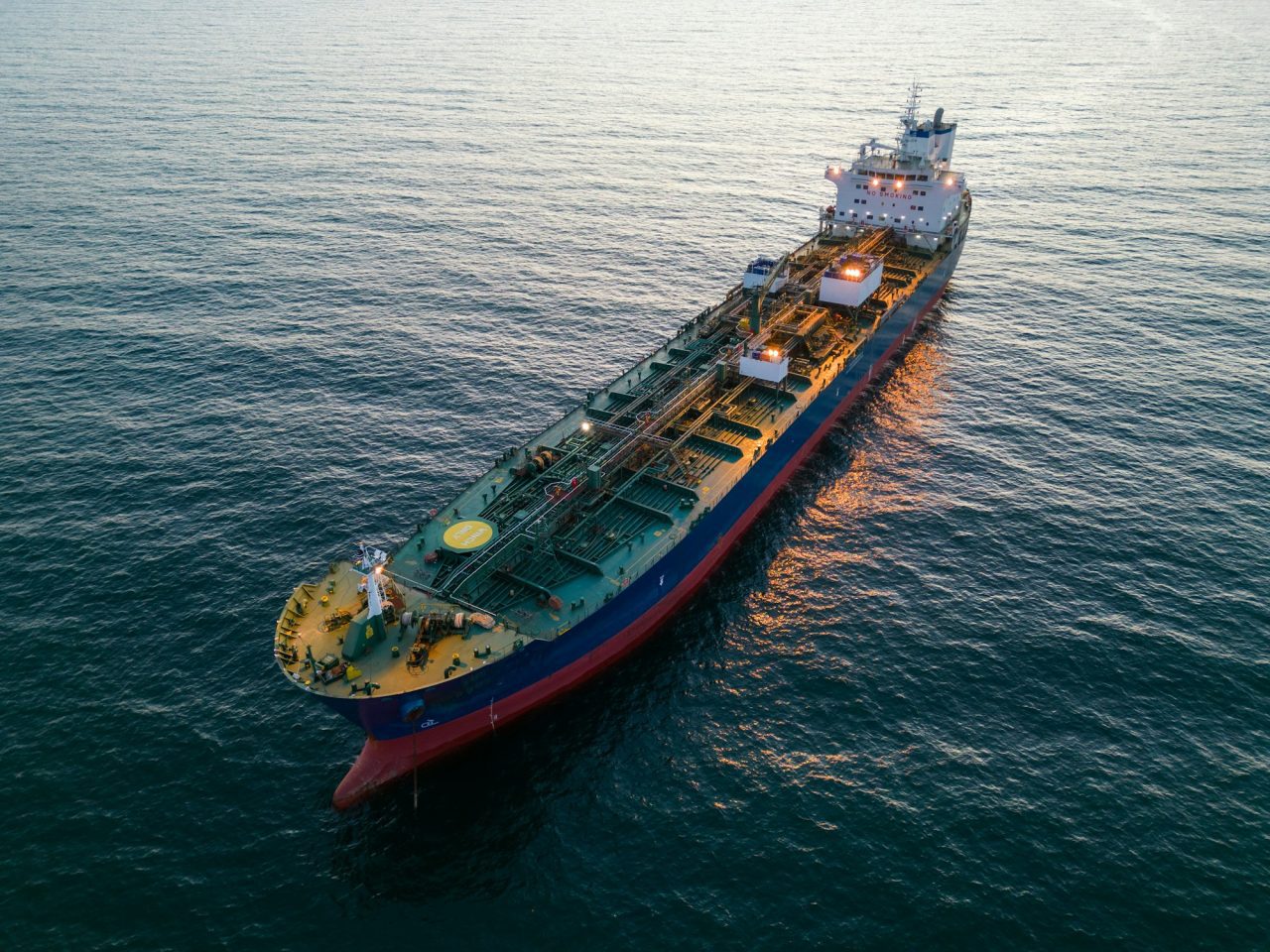
LNG bunkering explained: how marine gas systems get built
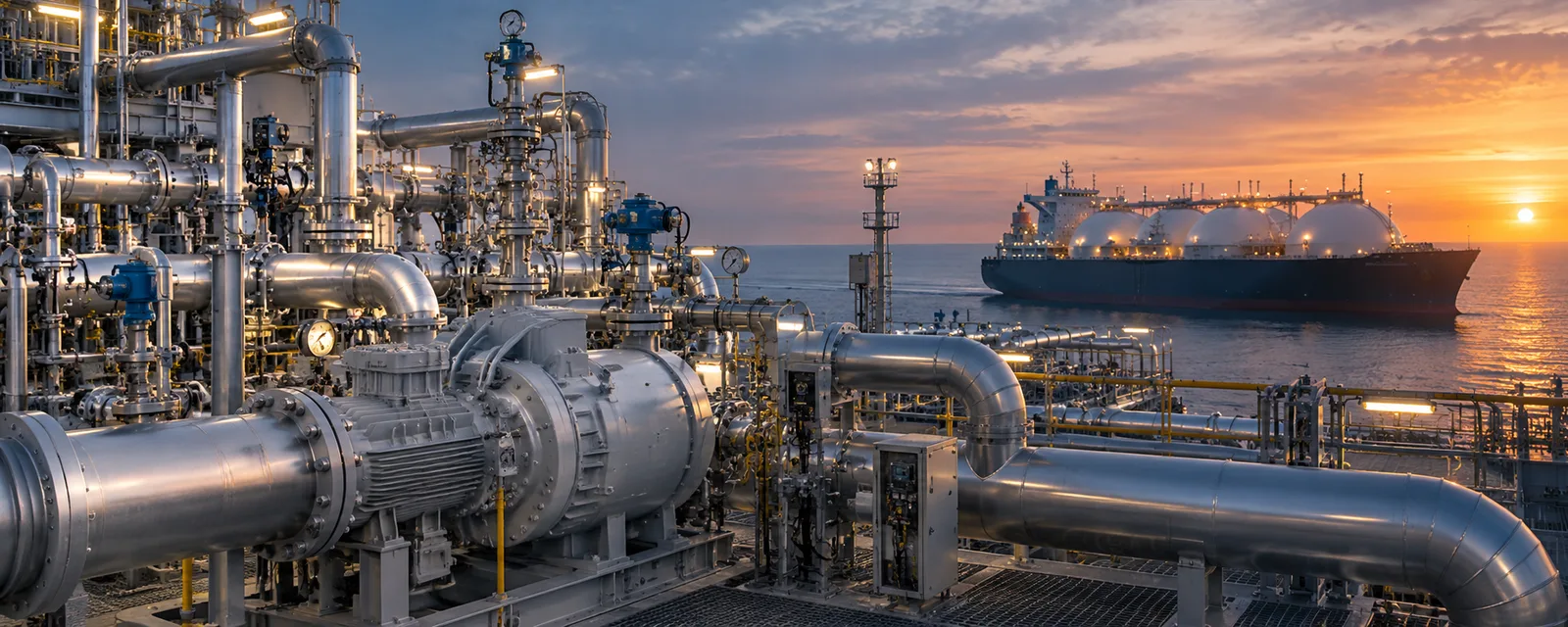
LNG bunkering explained: how marine gas systems actually get built
Last year, ships ordered to run on LNG made up close to a third of the gross tonnage ordered across every alternative marine fuel combined, 188 LNG-fuelled vessels in total, according to classification society DNV’s Alternative Fuels Insight data. That is not a niche transition technology anymore. It is what a large part of the shipping industry is actually building toward, and the equipment behind it has to be engineered properly or none of it works safely.
Why LNG bunkering is growing so fast right now
Two forces are pushing LNG bunkering from a specialist activity into standard marine infrastructure.
The first is regulation. Since 1 January 2020, the International Maritime Organization’s global sulphur cap has limited marine fuel to 0.50% sulphur content by mass, down from 3.50% previously, under MARPOL Annex VI. LNG burns with negligible sulphur oxide emissions and significantly lower particulate matter than conventional fuel oil, which is a large part of why so many owners have moved toward it as a compliant fuel rather than relying solely on scrubbers.
The second is simple market momentum. Global LNG trade volumes rose 5.4% to a record 56.3 billion cubic feet per day in 2025, according to the U.S. Energy Information Administration, with the United States, Qatar and Australia together supplying 63% of the world’s exports. More LNG moving through more ports means more demand for the bunkering infrastructure that puts it into a ship’s tanks. DNV’s data shows 22 LNG bunker vessels were added to the global orderbook in 2025 alone, and within the container ship segment specifically, LNG accounted for around 58% of the alternative fuel tonnage ordered that year.
What LNG bunkering actually involves
Bunkering sounds simple from the outside: LNG moves from a supply source into a vessel’s fuel tanks. In practice, it depends on a chain of equipment that has to work together under real operating pressure, at low temperature, on a schedule the ship cannot afford to miss.
That chain includes transfer systems designed to limit heat ingress and control boil-off gas, manifold skids that provide a secure connection between the supply source and the receiving vessel, pumps selected for the required flow rate and operating conditions, and emergency shutdown systems capable of rapidly stopping LNG transfer and isolating the system when an unsafe condition is detected. Our LNG bunkering systems are built around exactly this chain, engineered for the specific vessel and terminal involved rather than assembled from a generic package.
Manifold skids and the connection nobody sees
The manifold skid is where the actual physical connection happens between the bunkering source and the vessel, and it is one of the least visible but most safety-critical parts of the whole operation. It has to manage flow, pressure and temperature simultaneously, while allowing for a fast, controlled disconnection if the transfer needs to stop unexpectedly.
That is where emergency release couplings come in. An ERC allows the transfer line to disconnect automatically and safely if the vessel moves out of position or a fault is detected, protecting both the ship and the terminal from an uncontrolled release. It is a small piece of hardware carrying a large amount of responsibility, and it only works if it is specified and installed correctly for the exact transfer conditions it will face.
If your team is scoping a bunkering project and wants a second opinion on manifold or transfer system design before committing to equipment, talk to our engineering team directly rather than a sales contact, it is a conversation with the people who would actually design and install the system.
From FSRUs to shore terminals: how bunkering fits the bigger picture
Bunkering does not exist on its own. It sits downstream of the regasification and storage infrastructure that makes LNG available in the first place. Floating storage and regasification units convert stored LNG back into usable gas supply, and the feed systems, boil-off gas handling and send-out utilities on an FSRU have to be engineered around that specific vessel’s layout, not adapted from a standard terminal design. We cover that side of the chain in more detail on our FSRU and regasification systems page.
Shore-based terminals play a similar role on land, with compressor systems and send-out infrastructure feeding gas into pipeline networks or, increasingly, into bunkering supply chains that serve nearby ports.
The engineering challenge that gets underestimated: retrofit
New-build vessels get most of the attention in LNG coverage, but a large amount of real engineering work happens on vessels already in service. Fitting new LNG or gas systems into an operating vessel means surveying the existing structure, designing around real constraints that were never intended to hold this equipment, and installing it around a schedule the vessel cannot simply pause. It is a harder problem than new-build integration, and it is where the difference between a team that has actually done this work and one that has only designed on paper becomes obvious very quickly.
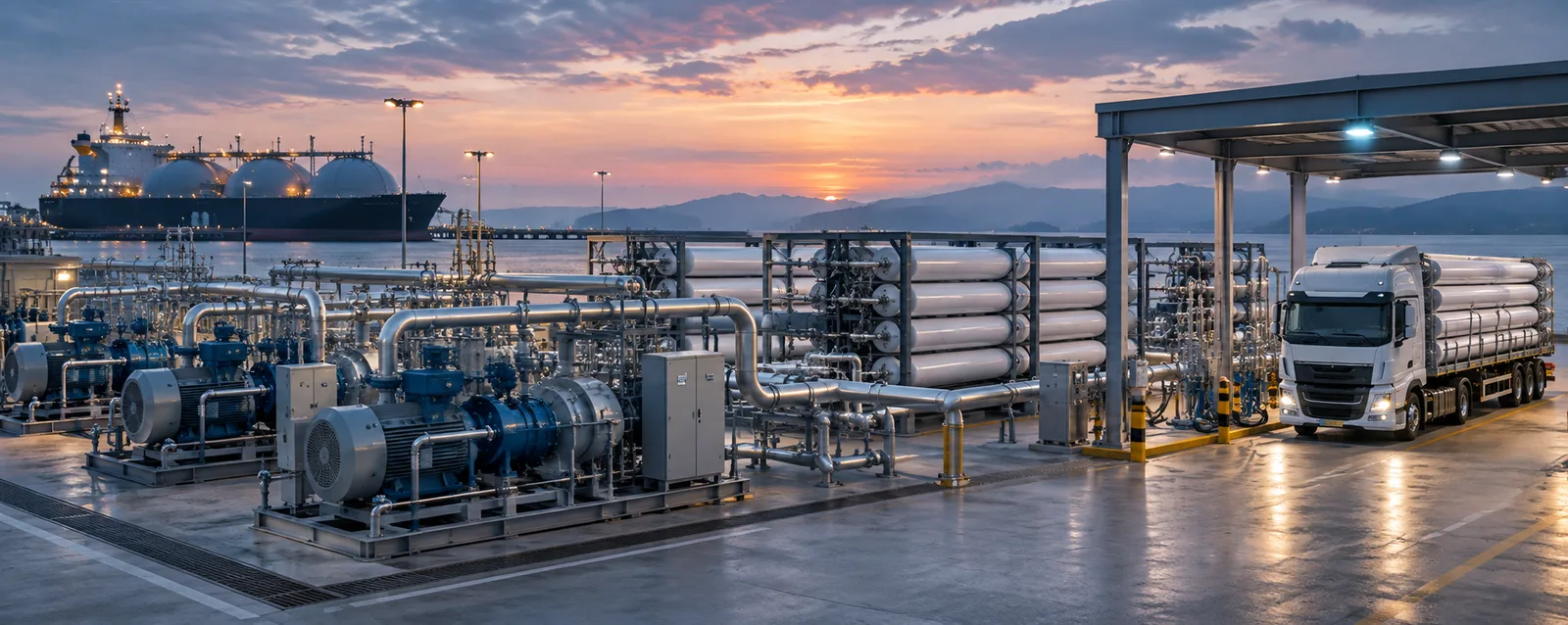
Where LNG bunkering is headed next
LNG is not being framed by most of the industry as a permanent endpoint, it is widely discussed as a transitional fuel on the way toward lower-carbon alternatives, hydrogen among them. What matters practically for anyone building infrastructure today is that much of the transfer, safety and containment engineering behind LNG bunkering, the manifolds, the ESD logic, the coupling systems, is the same category of engineering that future hydrogen handling will need. Building it properly now is not wasted effort even as the fuel mix continues to shift.
Getting it right
LNG bunkering is growing because the regulatory and market pressure behind it is real, not because it is simple. The equipment involved carries real safety consequences if it is specified poorly, which is exactly why it deserves engineering attention rather than a catalogue part number. Whether you are scoping a new bunkering connection, retrofitting an existing vessel, or specifying transfer and ERC systems for a terminal, getting the underlying engineering right the first time is what keeps a bunkering operation running safely for years rather than becoming a recurring problem.
Most asked questions
What is LNG bunkering?
LNG bunkering is the process of transferring liquefied natural gas into a vessel’s fuel tanks, typically through ship-to-ship transfer, truck-to-ship transfer, or a shore-based bunkering terminal.
Why are more ships switching to LNG as a fuel?
Largely due to the IMO’s 2020 global sulphur cap, which limits marine fuel to 0.50% sulphur content, and because LNG produces significantly lower sulphur oxide and particulate emissions than conventional heavy fuel oil.
How many LNG-fuelled ships were ordered in 2025?
According to DNV’s Alternative Fuels Insight data, 188 LNG-fuelled vessels were ordered in 2025, representing around 31% of the gross tonnage of all alternative-fuelled ships ordered that year.
What is an emergency release coupling (ERC)?
An ERC is a safety device on a bunkering transfer line that allows the connection to disconnect automatically and safely if the vessel moves out of position or a fault is detected during transfer.
What is a bunkering manifold skid?
It is the equipment package that manages the physical connection point for LNG transfer, handling flow, pressure and temperature control between the supply source and the receiving vessel.
Is LNG bunkering only used for new ships?
No. A significant amount of LNG bunkering infrastructure work involves retrofitting vessels already in service, which requires different engineering considerations than new-build design.
What is an FSRU and how does it relate to bunkering?
A floating storage and regasification unit stores LNG and converts it back into usable gas. It sits upstream of bunkering in the supply chain, making LNG available for onward transfer or pipeline distribution.
Is global LNG trade actually growing?
Yes. Global LNG trade volumes rose 5.4% to a record 56.3 billion cubic feet per day in 2025, according to the U.S. Energy Information Administration.
Will hydrogen replace LNG bunkering infrastructure?
Not directly or immediately. Many of the safety and transfer engineering principles built for LNG, including emergency shutdown and coupling systems, are expected to carry over to future hydrogen handling infrastructure as it develops.
Who should be involved in designing a bunkering system?
An engineering team with direct experience in transfer systems, manifold design and emergency release equipment, ideally one involved from concept through installation and commissioning, not just equipment supply.
Share on social networks:
Category
Tags
News